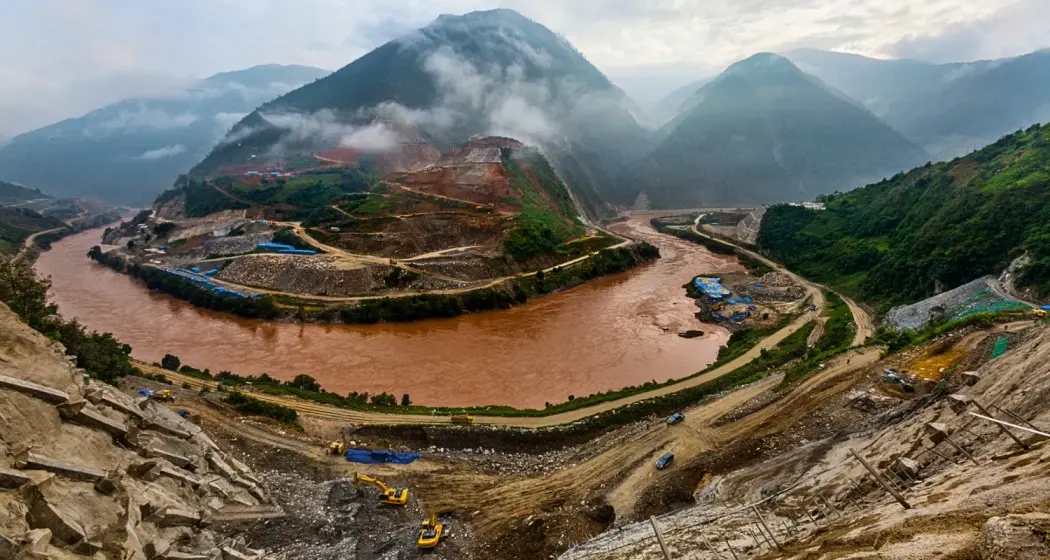


New Delhi, June 22: New Delhi has accelerated its strategy for the massive Siang Upper Multipurpose Project in Arunachal Pradesh following China’s commencement of construction on the world’s largest hydropower facility along the Yarlung Tsangpo river in Tibet. The proposed 11,000 MW Indian venture is increasingly viewed as a critical shield for water security, flood management, and energy generation across the northeastern states.
The infrastructure push comes as a direct response to the Medog Hydropower Project, which China is building just 50 kilometers from the Indian border. Upon completion, the transboundary Chinese installation is projected to reach an unprecedented capacity of approximately 60,000 MW.
The upstream development has raised significant alarms regarding downstream river dynamics, as the Yarlung Tsangpo enters India as the Siang before morphing into the Brahmaputra, a vital lifeline for millions. While Beijing has already broken ground on its project, India’s counter-initiative, managed by state-run NHPC, is currently in the pre-feasibility phase with preliminary surveys still ongoing.
Beyond generating an estimated 47 billion units of electricity every year, the Indian reservoir is designed to serve a vital defensive function. Experts have maintained that a large-scale storage dam within Indian borders remains essential to regulate river flows, absorb heavy flash floods, and counter any sudden, unannounced water discharges from the Tibetan plateau.
Addressing these geopolitical developments, the Union government stated that it is keeping a vigilant eye on the entire Brahmaputra river basin. In a recent brief to Parliament, officials affirmed that the administration is prepared to implement all necessary corrective measures to protect the livelihoods of downstream communities.