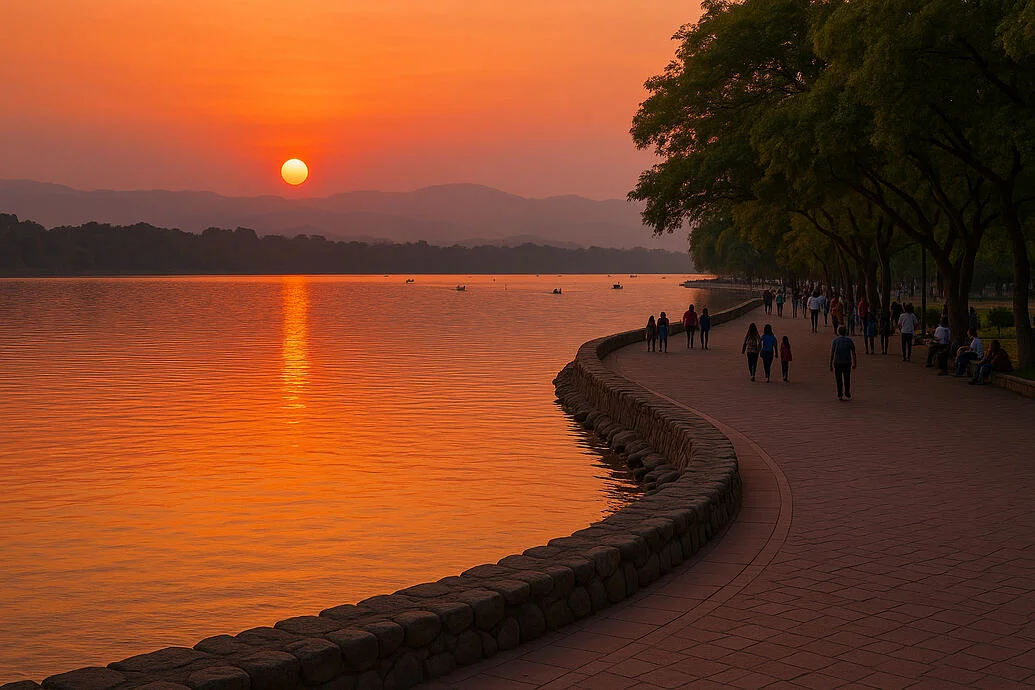


Chandigarh, July 3: The water-holding capacity of the Sukhna wetland will increase by approximately 54,000 cubic metres as scientific desiltation work progresses at the regulatory end of the lake. Executed on the recommendations of the Indian Institute of Technology Roorkee and in consultation with WWF-India, the project is designed to improve water retention and restore the ecological balance of the water body. Punjab Governor and UT Administrator Gulab Chand Kataria reviewed these conservation initiatives during the fifth meeting of the Wetland Authority of Chandigarh at Lok Bhawan.
“An integrated and coordinated approach among departments is necessary to ensure long-term ecological sustainability and biodiversity conservation,” Kataria asserted during the review. The administrator noted that Sukhna Wetland holds status as a wetland of national importance and called for continuous scientific management of its catchment area.
The authority finalized the official logo for the Wetland Authority and discussed a new proposal to study the maintenance of the Kansal diversion canal alongside soil and moisture conservation measures. Regarding the growth of lake vegetation, the administrator stated that the city must adopt sustainable weed management practices to protect aquatic biodiversity. He also directed officials to explore habitat enhancements to support migratory bird activity and suggested setting up informative display panels for visitors.
Encouraging biodiversity trends were shared with the authority, including a recent Panjab University zoology department survey that recorded over 20 fish species, with native varieties making up more than 80 percent of the population. The fisheries department has since introduced 10,000 fingerlings of Catla, Rohu, and Mrigal to support the local aquatic ecosystem. Senior UT officials, including Chief Secretary H Rajesh Prasad, along with environmental ministry representatives and wildlife experts, attended the session to coordinate the next stages of the conservation plan.