

Opinion by Harishankar Mishra, Senior Journalist
The moral integrity of state governance remains deeply tied to the accessibility of public employment opportunities for ordinary citizens. A comparison between administrative frameworks highlights a fundamental transition in how candidate selection operates within Uttar Pradesh, shifting from previous practices toward documented merit.
Under earlier administrative cycles, selection procedures frequently encountered criticism regarding the influence of recommendations over candidate qualifications. The application of interview scoring across Group C and Group D posts regularly altered written examination outcomes. This approach created significant vulnerabilities in the evaluation process, affecting candidates who relied on academic performance.
The operational credibility of the Uttar Pradesh Public Service Commission faced severe disruption during this period. Persistent issues involving question-paper security, OMR sheet irregularities, and policy implementation led to widespread candidate demonstrations in Prayagraj. Judicial interventions and central agency inquiries subsequently delayed multiple major recruitment drives, including police and educator selections, leaving candidate eligibility timelines unresolved for extended periods.
Following administrative changes in 2017, a revised recruitment model was established to eliminate subjective decision-making. The primary policy adjustment involved removing interview requirements for Group C and Group D positions. This modification ensured that final selection results corresponded directly to written examination performance rather than external influences.
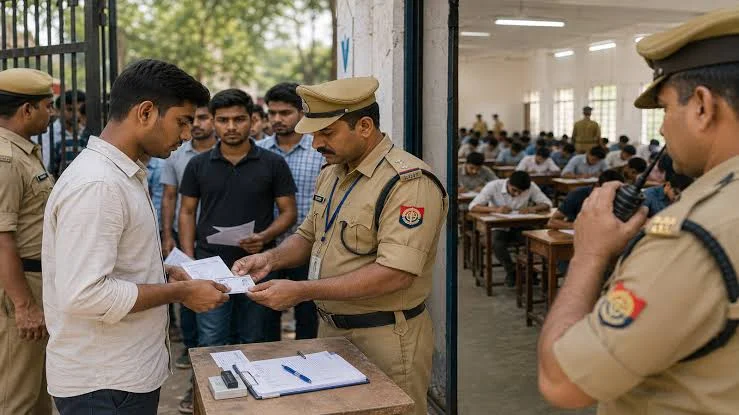
To maintain examination integrity, technological monitoring systems were introduced across testing facilities. Present procedures incorporate biometric verification, continuous live CCTV coverage, digital question paper coding, and computerized OMR evaluation. In instances of policy violations, statutory frameworks including the Uttar Pradesh Public Examinations (Prevention of Unfair Means) Act have been enforced, applying financial penalties and legal sanctions against organized interference.
Administrative updates have also been extended to internal personnel management. The implementation of the digital Manav Sampada Portal replaced manual confidential reports for promotions and transfers with verifiable performance records. Over recent years, large-scale recruitments across the police force, basic and secondary education, and health services have concluded under these standardized parameters. Continuous updates to security protocols remain active to address operational challenges and maintain system reliability.