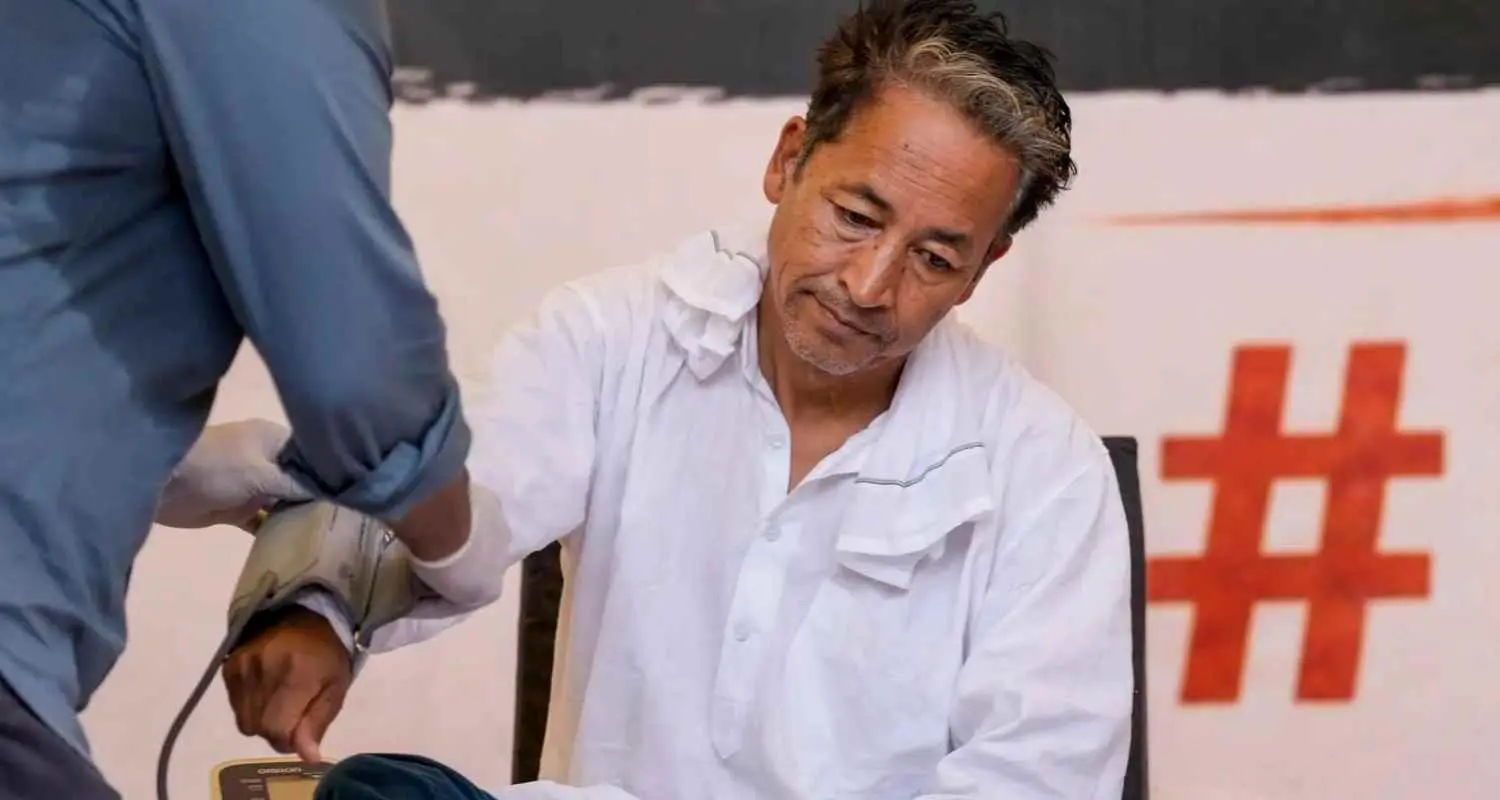


New Delhi, July 15: A public interest litigation has been moved before the Delhi High Court demanding immediate medical intervention and life-saving care for climate activist Sonam Wangchuk, whose health is reportedly failing rapidly during an indefinite hunger strike at Jantar Mantar. The activist commenced his protest on June 28 regarding recent examination paper leaks. Moving swiftly due to the critical nature of the situation, advocate Rakesh Kumar Saini approached the court seeking an urgent listing of the matter, maintaining that a failure to act swiftly could result in an irreversible tragedy.
The legal action places the primary focus on the immediate physical condition of the protestor. The filed plea states that the activist has already lost approximately 8.25 kilograms, experiencing frequent episodes of low blood sugar, severe muscle loss, dizziness, and extreme bodily weakness. The petition asserted, “The state has remained insensitive despite the alarming deterioration in his health, making immediate judicial intervention absolutely necessary to prevent irreparable harm.”
Legal duties and administrative responsibilities form the core of the argument presented to the bench. The plea argues that the administration cannot sit back as passive spectators when a citizen’s life faces imminent danger, drawing a connection to the constitutional obligations of the government. The petitioner declared, “Allowing a citizen’s health to deteriorate to this extent without any form of intervention amounts to a failure of the constitutional and public duties of the authorities.”
Beyond requesting the administration of vital liquid nutrition, proteins, and essential vitamins to halt physical decline, the petition calls for the initiation of an official dialogue with the activist regarding his grievances. However, the exact timing of the court hearing faces a practical challenge. The Delhi High Court Bar Association has called for a complete abstention from work to protest a proposed change in the financial jurisdiction of district courts, meaning the matter faces scheduling uncertainty as lawyers are requested to stay away from both physical and virtual hearings.