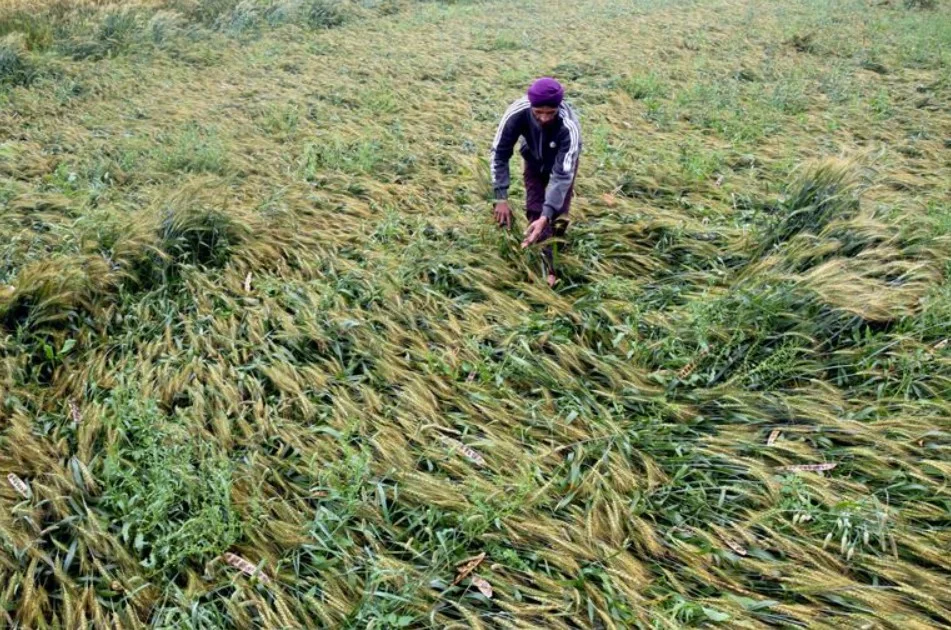


Chandigarh, March 20: A persistent Western Disturbance originating from the Mediterranean region has brought unseasonal moderate to heavy rainfall across Punjab, Haryana, and Rajasthan, sparking significant concern among the farming community. Agricultural experts noted that while the weather system is expected to clear by this evening, the immediate impact of high-velocity winds and moisture has created a “mini-monsoon” atmosphere during a critical period for Rabi crops.
The Punjab Agricultural University and state agriculture departments have issued warnings regarding the continuous shift in weather patterns, which has disrupted the traditional rise in March temperatures. Harvinder Singh, District Chief Officer of the Agriculture Department in Mansa, stated that the primary danger to the wheat crop lies in strong wind gusts rather than the rain itself. He affirmed that if the rain is not accompanied by high-speed winds, the standing wheat may survive, though he maintained that mustard harvesting has already faced necessary delays due to the cold snap.
In Haryana, the second spell of rain within five days has caused a sharp drop in minimum temperatures by approximately 1.2 degrees Celsius. Farmers expressed panic as scattered reports of crop flattening emerged, raising fears regarding the final production and grain yield. The Meteorological Department asserted that winds reaching speeds of 30 to 40 kmph are likely to persist in the Malwa, Majha, and Doaba regions throughout the day, further complicating the situation for those with ready-to-harvest fields.
The current climate has forced a return to heavy clothing for residents across North India, a phenomenon rarely seen this late in the month. Agricultural officials declared that while the snowfall in the mountains has contributed to the temperature dip, the focus remains on protecting the agricultural output of the region. They asserted that a move toward stable, warmer weather is essential to prevent long-term damage to the rural economy.