


Chandigarh, Sept 21: Punjab has initiated preparations to file a plaint in the Supreme Court regarding the Kishau Multipurpose Project, asserting that the initiative should not proceed without addressing the state’s long-standing claims to Yamuna waters. Official sources in the Water Resources Department confirmed that the office of the Advocate General has been requested to approve the draft document, which has already received vetting from a former Advocate General of the state.
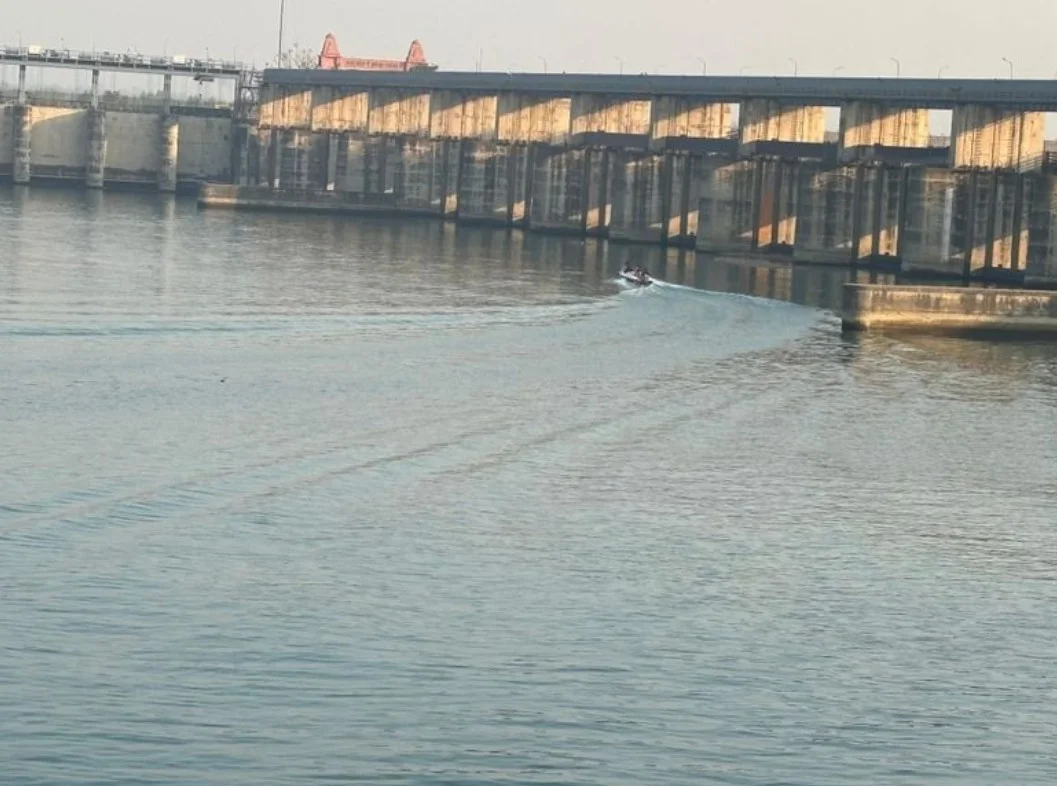
The development follows an agreement signed by six states — Himachal Pradesh, Uttarakhand, Uttar Pradesh, Haryana, Rajasthan, and Delhi — to advance the 422 MW project on the Tons river, a primary tributary of the Yamuna. Designed with a proposed storage capacity of up to 1,562 million cubic metres, the project aims to fulfill drinking, irrigation, and industrial water requirements in addition to power generation.
Punjab maintains that the river-sharing arrangements governing the basin remain incomplete due to its exclusion from the May 12, 1994 Memorandum of Understanding signed between the neighboring states. “The 1972 Irrigation Commission Report states that Punjab falls within the Yamuna basin. Since 1992, Punjab has been requesting the Central Government to include it in all discussions on Yamuna water allocation,” an official stated on the condition of anonymity.
The state contends that its historic entitlements, established under the March 12, 1954 agreement between un-reorganised Punjab and Uttar Pradesh which allocated two-thirds of the Yamuna waters to Punjab, were not rendered invalid by the reorganisation of 1966. “In 1954, Punjab was entitled to two-thirds of the Yamuna waters, but under the 1994 arrangement, the state was completely ignored. This MoU cannot be treated as an exhaustive or final settlement, particularly as Clause 8 provides for a review after 2025. Therefore, the allocation should now be reviewed and Punjab should get its legitimate share,” the official affirmed.
Chief Minister Bhagwant Singh Mann has consistently maintained that principles governing inter-state water distribution must be applied uniformly across all river systems. “If Haryana, despite not being a riparian state of the Ravi and the Beas, can receive their waters as a successor state, Punjab should similarly be considered a successor state for the purpose of the Yamuna waters,” the official declared, capturing the core argument presented by the state leadership.
Having previously lodged a complaint under Section 3 of the Inter-State River Water Disputes Act, 1957, on April 25 last year seeking the constitution of a tribunal, Punjab is now pursuing judicial avenues to ensure its claims receive formal adjudication.