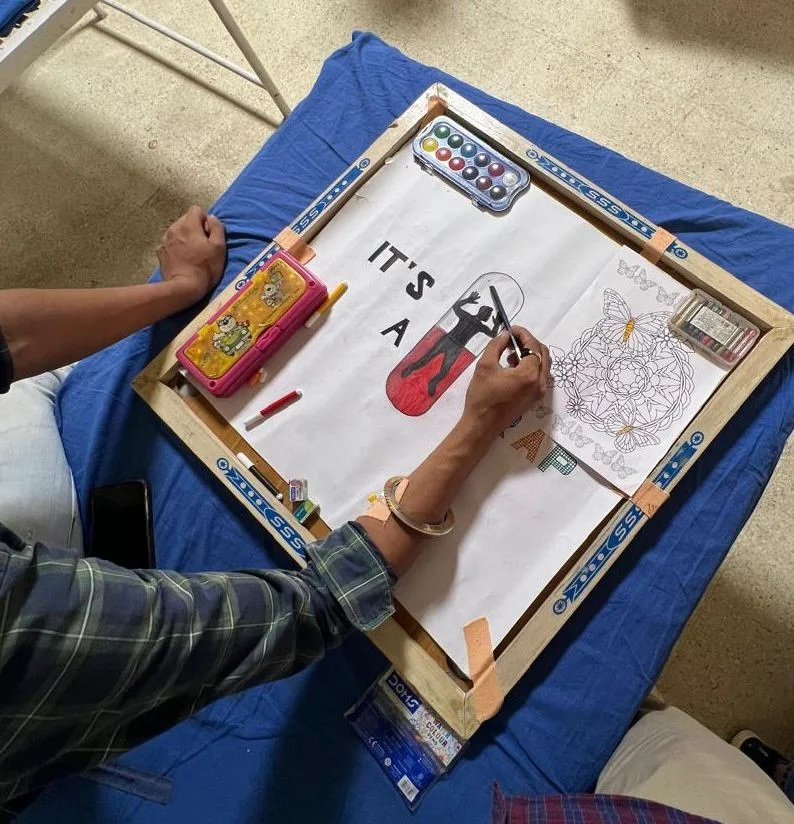


CHANDIGARH, JUNE 8 — Traditional clinical treatments at Punjab’s state-run recovery facilities are being paired with creative psychological exercises to help recovering drug users process withdrawal symptoms and rebuild self-esteem. Implemented across 30 government-operated de-addiction and rehabilitation complexes spanning 15 districts, the expressive art program operates as a core element of the state’s multi-layered Yudh Nashean Virudh campaign.
The clinical program relies heavily on weekly structured sessions where participants engage in painting, sculpting, and sketching to anchor their psychological health during detoxification.
“As part of the Yudh Nashean Virudh campaign, the Bhagwant Mann government is ensuring that all victims of drug abuse receive emotional and psychological support through these art therapy sessions,” stated Dr. Balbir Singh, Punjab Health and Family Welfare Minister. The minister added that long-term recovery depends entirely on addressing mental well-being alongside physical stabilization to help individuals safely return to their communities.
The specialized curriculum was integrated into the public healthcare grid with the assistance of the Leadership in Mental Health Programme, a national fellowship group placing trained psychologists and social workers into regional treatment centers. More than 290 admitted individuals participated in the creative rehabilitation blocks during a single seven-day tracking period, utilizing the medium to visualize personal goals and manage chemical cravings.
Clinical counselors at the Swami Vivekanand De-addiction Centre, based out of the Government Medical College in Amritsar, reported a measurable reduction in patient anxiety during initial intake phases.
“When patients come to us, they do not share much,” noted center counselor Bhavna Sharma, explaining that deep emotional blockages often impede early medical counseling. Sharma stated that introducing visual art therapy and mindfulness-based craft activities allows individuals to navigate complex internal experiences, mapping out a constructive, drug-free trajectory for their lives.
Patients undergoing long-term care confirmed that the creative focus acts as a powerful deterrent against daily psychological temptations. Former drug users stated that substituting compulsive habits with artistic production helped mitigate the severe distress associated with chemical withdrawal, offering a critical distraction that gradually restored their mental focus and personal autonomy.