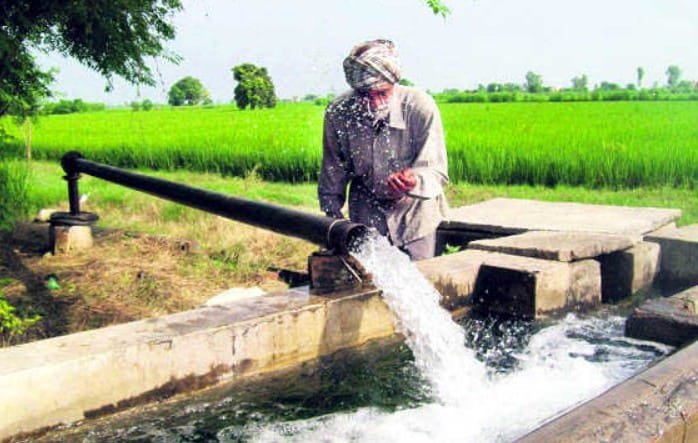


CHANDIGARH, May 20 — Agriculture in Punjab’s Kandi belt underwent a major transformation on Tuesday as canal water reached the region’s fields for the first time in more than three decades under a new state initiative.
The newly operational Kathgarh Lift Irrigation Scheme, linked directly to the Bist Doab Canal, is designed to resolve decades of severe water scarcity and agricultural instability in the semi-hilly terrain. Spearheaded by the Bhagwant Singh Mann-led administration, the project marks a shift away from the region’s traditional dependence on erratic rainfall and rapidly depleting groundwater tables.
“Earlier, we lived at the mercy of rain, and a dry season meant certain loss,” a local farmer stated when discussing the historical challenges of the area. “Now, water has reached our fields and with it, a sense of security we never had before.”
The infrastructure project is situated on the right bank of the canal system in Shaheed Bhagat Singh Nagar district. It is engineered to lift water up to 300 feet to overcome the uneven, rocky topography that previously made standard tubewell irrigation unviable. The water is distributed through a 221-kilometer closed pipeline network built specifically to minimize transmission losses and maximize delivery efficiency to fields.
The scheme provides dependable irrigation to 38 villages, immediately covering nearly 11,500 acres of previously water-stressed land. Overall, the project will expand total irrigation coverage in the Kandi belt of Balachaur from 28,205 acres across 72 villages to more than 39,705 acres spanning 110 villages. This expansion offers a critical reprieve for agricultural zones long classified as environmental “dark zones” due to depleted groundwater.
To manage long-term operational costs, the state integrated a 1,300-kilowatt solar power system into the irrigation infrastructure. Officials noted that the solar installation will support energy efficiency and promote sustainable water management practices across the network.