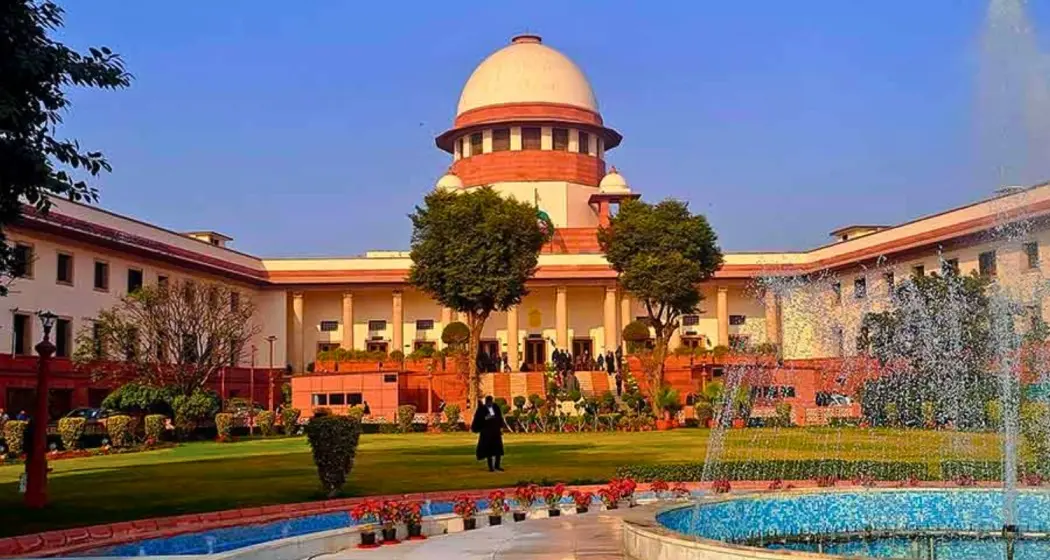


NEW DELHI, Sept 28: The Supreme Court on Monday declined to grant an interim stay on the Union Government’s decision to levy a Merchant Discount Rate (MDR) on specified UPI person-to-merchant transactions exceeding Rs 2,000, scheduled to take effect from October 15.
A bench led by Chief Justice of India Surya Kant, alongside Justices Joymalya Bagchi and V. Mohana, issued formal notices to the Centre, the Reserve Bank of India (RBI), and the National Payments Corporation of India (NPCI) while hearing a Public Interest Litigation (PIL) filed by advocate Anjan Datta. The top court directed the respondents to submit their detailed counter-affidavits within four weeks.
Observing that the matter appeared “less legal and more technical,” the bench sought clarification regarding the legal scope and executive authority behind introducing the charge. Appearing for the Centre, Additional Solicitor General N. Venkataraman maintained that nearly 96 percent of people using the UPI gateway remain exempt from the levy, asserting that no revenue from the fee goes to the government as it functions strictly as a settlement fee between system intermediaries.
The petitioner challenged the executive notifications issued in mid-September, asserting that introducing commercial levies without statutory safeguards, public consultation, or transparent cost studies could result in costs being passed down to consumers or cause transaction-splitting among low-margin traders. Counsel requested an interim stay on the framework pending further proceedings, but the bench declined.
The upcoming framework mandates a 0.4 percent MDR on general merchant payments above Rs 2,000, capped at Rs 300 for higher amounts, while person-to-person transfers and payments to small merchants remain completely free of charges.