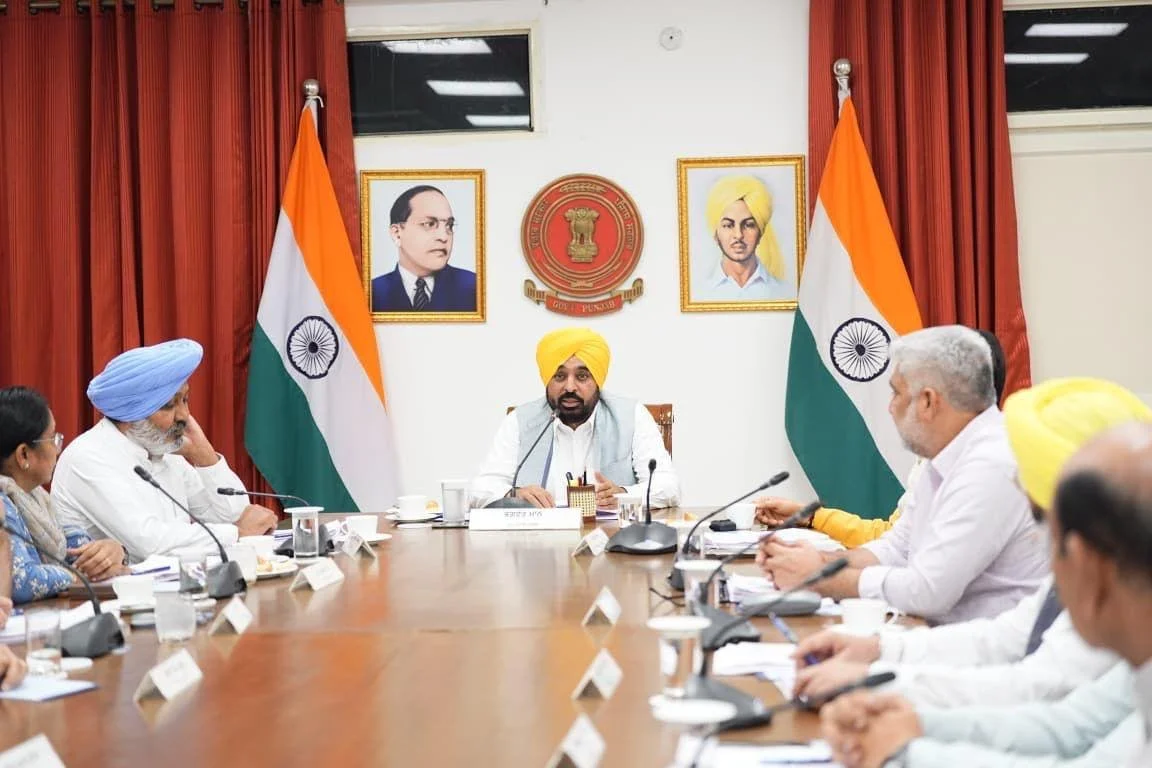


CHANDIGARH, MAY 31 — The Punjab Cabinet has approved the total abolition of the contractual employment system within state departments, establishing a direct employment framework that will benefit more than 65,000 outsourced and temporary workers.
Under the newly cleared legislative measures, the state will transition existing outsourced personnel into direct government roles and regularise their positions over time. Private contractors will be completely removed from the state employment structure, allowing workers to receive their full salaries and statutory benefits directly from the government.
Chief Minister Bhagwant Singh Mann announced the decision following a cabinet meeting, noting that the reform addresses decades of job insecurity.
“More than 65,000 contract workers of Punjab have given the best years of their lives in the service of the state,” Chief Minister Mann stated during a press conference. “With this decision, Punjab has returned to them what is rightfully theirs. No contractor will now stand between these employees and the state.”
The reform package repeals the Punjab Adhoc, Contractual, Daily Wage, Temporary, Work Charged and Outsourced Employees’ Welfare Act, 2016. In its place, the cabinet cleared the Punjab State Outsourced Personnel (Transition to Contractual Engagement) Bill, 2026, alongside the Punjab Contractual Personnel (Absorption Against Sanctioned Vacancies) Bill, 2026.
The new system sets a structured pathway toward permanent residency in the state cadre. Group C and Group D outsourced employees who have completed five years of continuous service will transition into direct state contractual employment. After completing ten years in this direct contractual pool, they will be absorbed into regular sanctioned positions.
A expedited three-year timeline applies to individuals working in hazardous roles, including fire services personnel, power sector linemen, sewer workers, and urban sanitation staff.
The policy safeguards workers against sudden terminations by mandating that no employee can be removed without written reasons and a formal opportunity to be heard. Furthermore, all covered employees will receive salaries directly into their bank accounts without intermediary deductions, alongside access to provident fund, gratuity, statutory maternity leave, and ten days of annual casual leave.
The transition process is scheduled to begin within 45 days. A state-level Empowered Committee, led by the Chief Secretary, will supervise the phased implementation across 51 state departments.